Showing posts sorted by relevance for query laundry hamper. Sort by date Show all posts

Sunday, June 8, 2014

Jig Saw Project

    I was at my Mother's house last week and when I went upstairs I noticed a woodworking project for years and years ago.


you can see the none-shrinking wood filler that I put in the voids in the plywood.  Now I wouldn't use plywood, but this was long before I had a table saw, or clamps or skills.

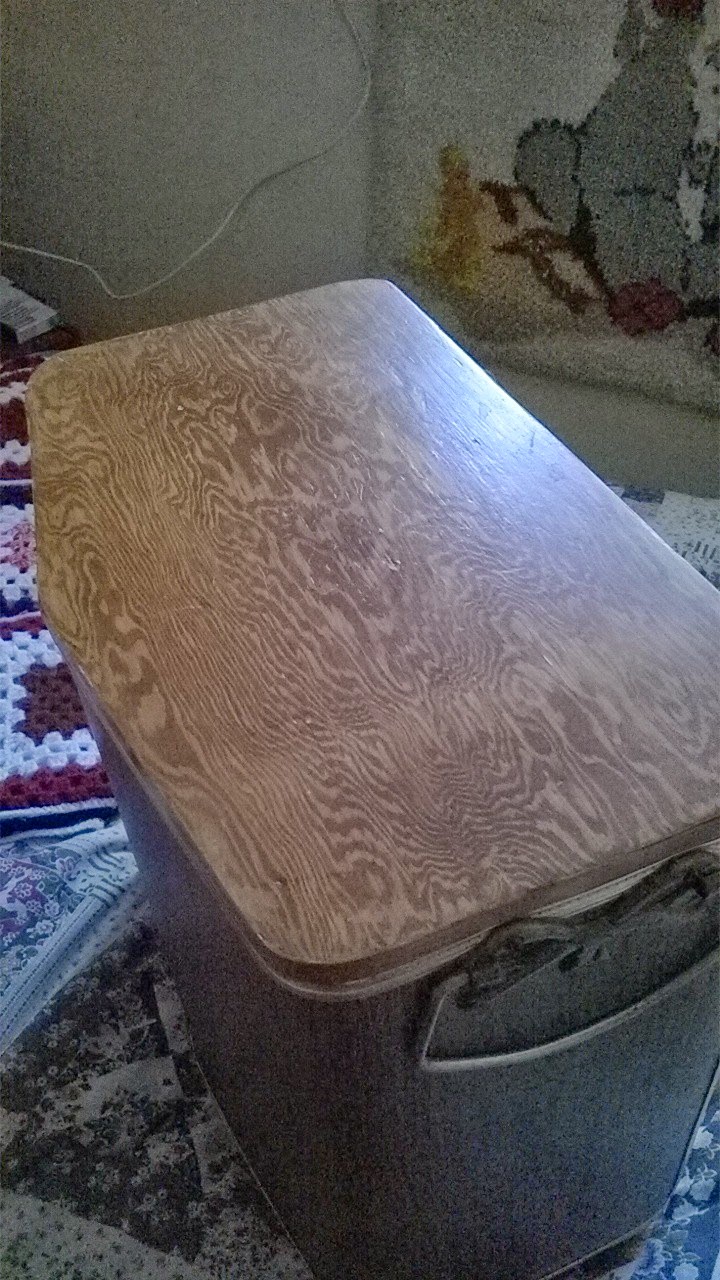
   This laundry hamper has been in the upstairs hallway since the early 70's and the replacement lid was made by me in the very early 1980's.  It was probably one of my earliest jig saw projects.  I took the broken lid off and used it as a template and cut the top out of 3/4 plywood.  I remember staining it and telling a friend of mine from school that it was zebra wood. 
   This plywood project is also interesting to me because the edge of the plywood was veneered.   I remember buying a roll of veneer and going out of my mind putting it on with masking tape.  However, I must have been successful as the top is still there and the edge is still hidden.


Makita, 3.7A VS Orbital Jig Saw w/ Case
Makita 3.7 amp VS. Orbital Jig Saw

  This is actually the jig saw that I have in my shop and while I turn to the band saw often times, I would not be without my little jig saw.  I wrote a blog in April 2012 saying that a jig saw was an important and useful tool for an "Apartment Tool Kit" but it is also useful for any wood shop. If push came to shove the band saw could go and I would keep my jig saw.

 I have another little project to share.


  I really think that every wood shop should have a wood burning pen in  drawer some place. Mine is a  pen with one tip and don't pretend to be an artist, but the burned lines add a bit of eye appeal to simple projects.  In this case there isn't any paint or ink that would last on a fingernail brush, but burned lines will be fine.  

  As you skills improve you may not be able to build furniture because of lack of space or cash.  I believe that if you can't build large complicated things in your shop you should, keep building small projects and add to them with burning, carving or some other technique. Remember much of the shop time is good for the soul as much as anything else.

cheers, ianw 


Friday, May 3, 2019

In our family home.

  I haven't lived in our family home since the early 1980's but it is the place where I did much of my early wood working.  My younger brother has lived here all his life and knows no other home. I learned basic skills from my Grandfather in Bracebridge Ontario and practised and developed at home. At one point with the help from friends I built a wood shop (actually a large shed) in the back yard.  We did it all, from digging the holes for the concrete pillars to putting the shingles on the roof.  My uncle who is a licensed electrician ran one circuit from the house fuse box out to the shop. I didn't have enough juice for serious power tools, nor enough money to buy any anyway. In that shop I made many things from reclaimed wood little knowing I was years ahead of fashion, I was just too cheap and poor to waste free wood. In that shop I also cut my left index finger on a table saw, for the first time of several times.  It is amazing that I still have enough finger to play guitar.  In that shop my friends and I made home made hard cider, it was drinkable if you were a bold and tough young man. I suspect you couldn't have sold it in prison.  I also made several small clocks in the shop that when out in the world as gifts, so not all my work in those days was slap dash.

  Currently I am spending extra time around home helping out my Mother who is recovering from a broken hip.  I think this week has been the first time my brother and I have slept over in the house in thirty years.  Anyway while I am hanging out making tea and lunches for Mom I noticed two woodworking projects that I did a long time ago.

  This book case was made in the driveway one Saturday while I was a high school student. I bought the shelves pre-cut and a 2 x 6 for the vertical pieces. I knew even then that pre-formed chip board was weak and so made the design to support the shelves in the middle.   I think I has been repainted to darker colours, I suspect it was much brighter in the 70's, it was a time of vibrant colours. I know the basement has flooded at least once and the modern chip board flat pack book cases in it  suffered terribly. On the other hand this shelf sits on 2 x 6 by 4 inch legs and came through the flooding fine. This is why making things from wood is a good idea, here is a basement rec-room bookshelf that is over forty years old. (old enough that it has been through the 'flood')


  At some point the lid of our laundry hamper fell off or was knocked off by a clumsy teenage boy.  Anyway the stop gap solution was to cut out a lid from plywood, edge band the piece and stain it. 
previous related blog post.

  This was probably my first jig saw project and certainly the first time I put edge banding on anything. Again, a project from the early 1980's.  I did not expect this repair to last all these years.  It is a testimony to practical thinking on my Mother's part as well as our families love of wood grain, even plywood wood grain.

  For a while I expect my life to involve more time in our family home, more tea making and probably less time in my home shop.  Once the weather gets better maybe I will return to making things in the drive way while I am here, the shop/shed is still stands but is filled hopelessly to the rafters will years of collected stuff so working in it is not likely.

  cheers, ianw